Editorial team ·
Describe stairs and uneven pavement before sending the route
Updated:
Your map says the next stop is six minutes away. A friend asks whether the route has steps. Think through the walk in pieces. A flat stretch may still end at a raised door, and a short stair-free option can include uneven paving.
Give the alternative route its own description
- Write one section at a time
- Use the visible start and end points.
- Describe the surface and any level change.
- Confirm the other approach
- Check whether the intended door opens.
- Record anything important that remains unknown.
Break the route at each surface change
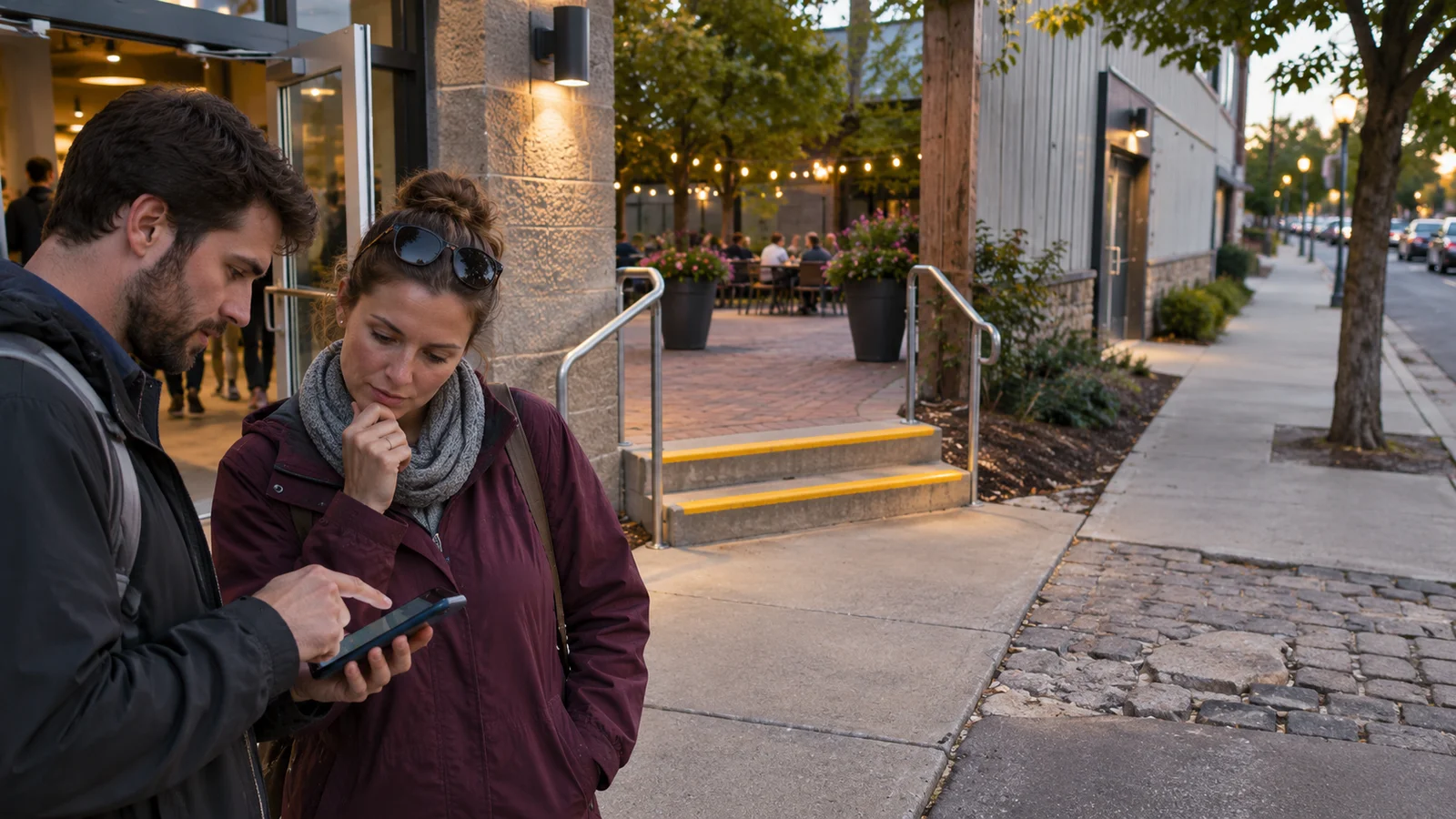
In the fictional walk, the arena exit leads to a paved sidewalk, then two steps into a courtyard. A longer route follows the public street and reaches a side door. A patch of rough paving remains on one approach.
Measure or verify what matters instead of saying the route is easy. Write whether a curb is raised, if there is a railing, and where the rough surface starts. Label estimated distances and leave a slope unmeasured if you cannot check it.
Confirm whether the alternate door is public at the time of the visit. A route can work during normal hours and point to a locked door after a game. Ask the venue or second stop about that specific entrance.
Keep the observation dated and name the starting gate. That helps people judge whether a report from another exit or season applies to their own walk.
| Section | Main route | Alternative to check |
|---|---|---|
| From the arena | Paved sidewalk from public exit | Same start |
| Near the courtyard | Two steps | Continue around by the street |
| At second stop | Main entry through courtyard | Side door, verify current access |
Questions and answers
- Is ‘flat’ enough for the note?
- Add any rough stretch, curb, doorway or slope that changes how the path can be used.
- Should I give a step count?
- If verified, count them and name where they are.
- What if the surface changes after work on the street?
- Date your note and check current conditions before reusing it.