Editorial team ·
Getting around on a sports evening: build a route with a clear return
An adult planning guide for arrival points, second stops and source dates without presenting fictional directions as a tested walk.
Updated:
A game-night route should explain where it starts, where it ends and which entrance it uses. A list of nearby places is not enough. Choose the main activity and check whether a second stop fits with its own opening and access information.
Route card
| Part | Information to retain |
|---|---|
| Start | Identifiable arrival point |
| Main activity | Venue, date and relevant entrance |
| Transfer | Source and whether the path was walked |
| Second stop | Separate opening and access check |
| Return | Distinct route and current source |
A short line on a map can pass through an internal area or reach a door that is not used that evening. Do not turn a map estimate into a guaranteed walking time. State whether a time is measured, estimated or supplied by a source.
A fictional evening
An invented plan places a second stop after a game with no fixed ending time. The guide keeps that stop optional and checks the return independently. It does not invent a finish time to make the itinerary appear complete.
If a route changes, update the written directions and the sketch together. Preserve the previous source in the working record so the change remains understandable. An old screenshot should not continue to provide current instructions without a new check.
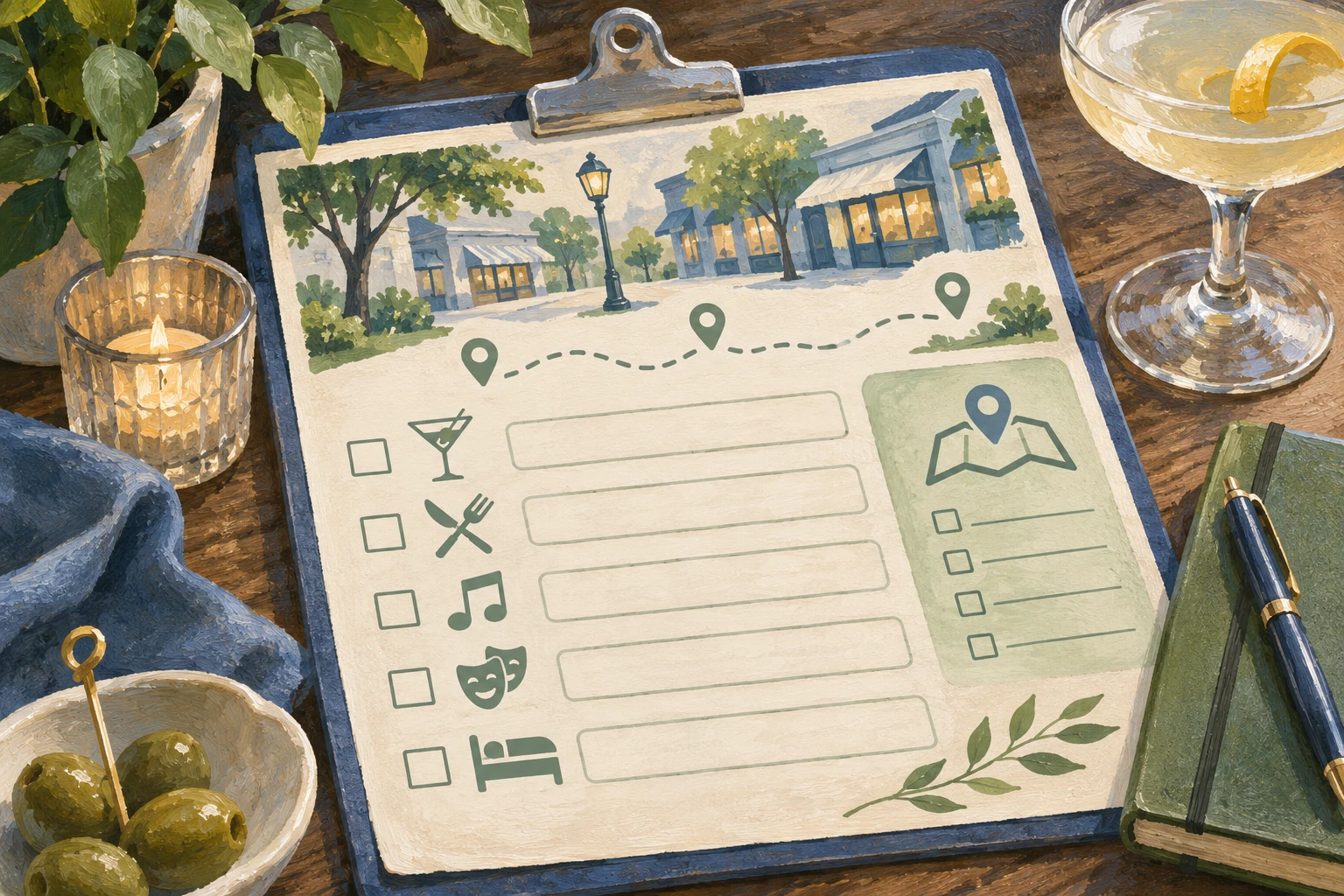
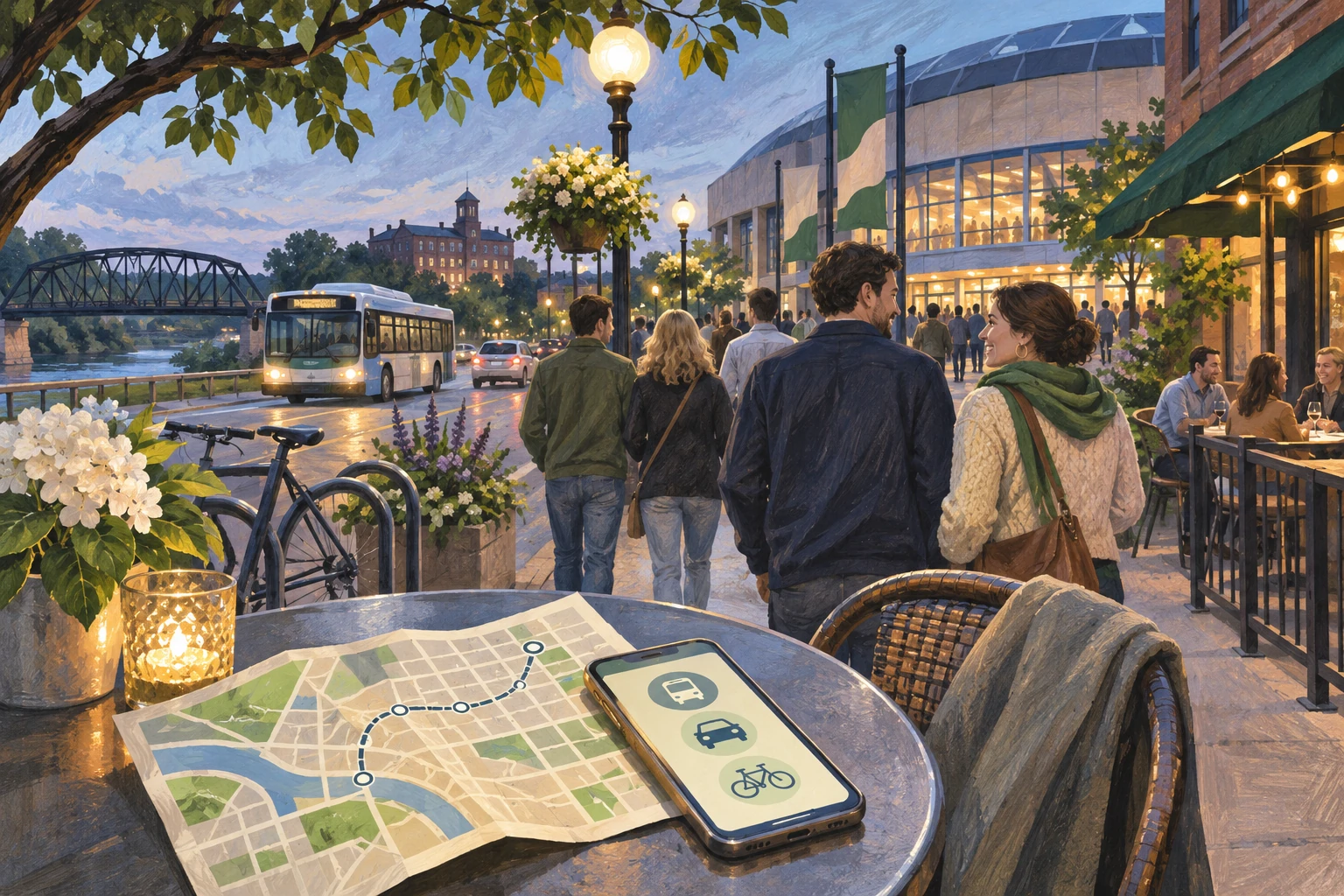
The neighbourhood template records the details. From arena to second stop checks the transfer; venue-guide verification limits practical claims. The illustrations are conceptual and do not confirm current Brantford routes, schedules or venue access.