Editorial team ·
Check what is still open when the Brantford game ends
Updated:
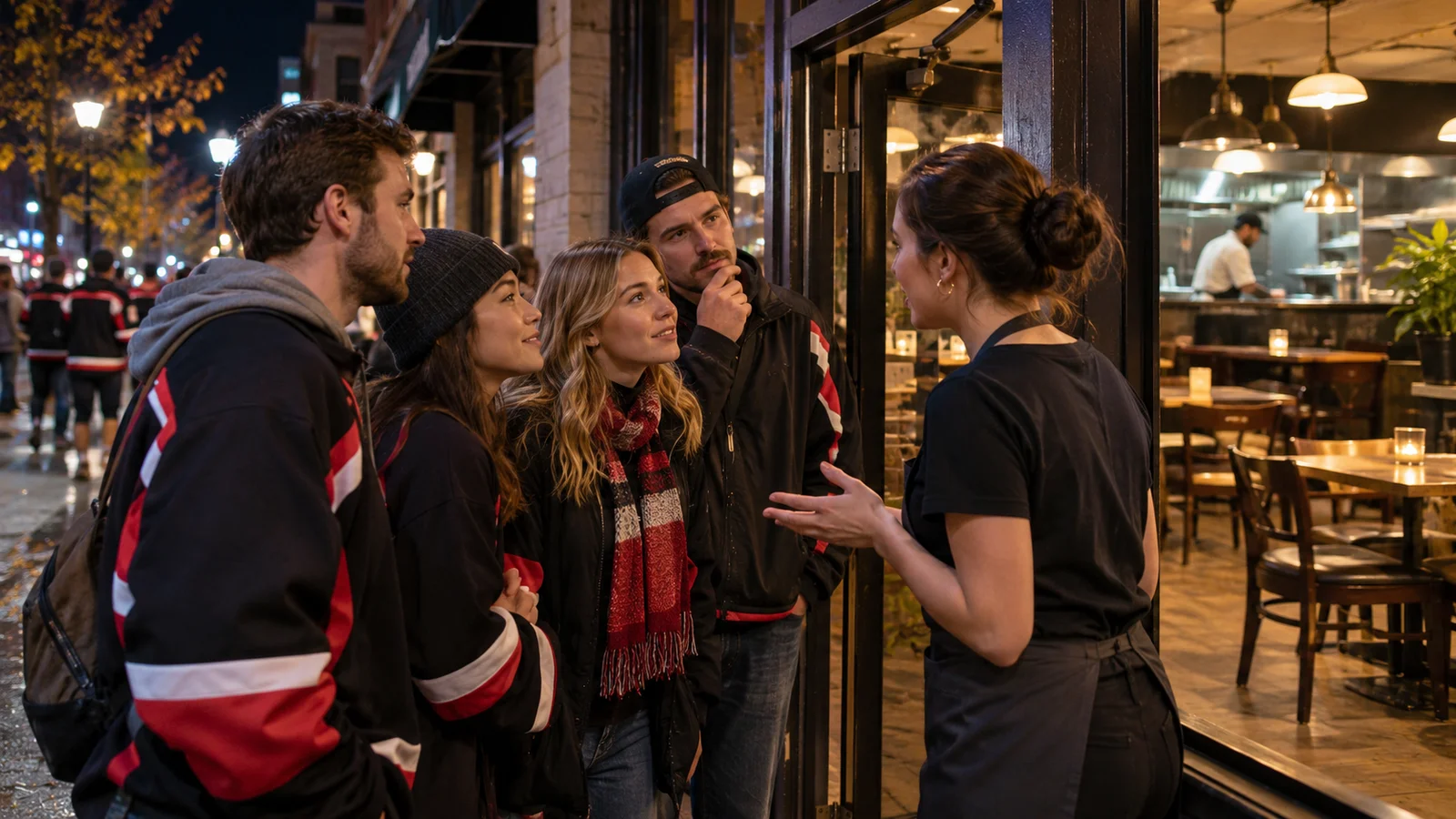
The listing says the place closes at eleven. You reach it just after ten and find the kitchen has already stopped taking orders. Ask about the service you want, not just the time on the door. The answer may save the group an unnecessary walk.
Separate building hours from last service
In the fictional example, the café room stays open until 11:00, last food orders are at 10:00, and the expected arrival is 10:10. The room is open. Dinner is no longer available in this example.
Check the day and event date when reading the listing. Hours on a weekend or special event may differ. If you need a particular service, look for it in the venue’s current information or ask the staff.
Leave time for walking from the actual arena exit. When you are comparing two places, give both the same estimated starting time and check the last order separately.
If the game runs late, use a clear fallback such as a confirmed later service or going straight to the ride home. Avoid sending the group to a place on the strength of an undated screenshot.
| Detail | Time in the example |
|---|---|
| Room closes | 11:00 p.m. |
| Last food orders | 10:00 p.m. |
| Expected arrival after the walk | 10:10 p.m. |
| Decision | Use a confirmed alternative for food |
Questions and answers
- Does an open room mean the kitchen is open?
- Check the service separately. The two times may be different.
- What if the listing and venue response disagree?
- Use the current answer from the place that is providing the service.
- Should I keep the second stop in an itinerary after a late finish?
- Keep it optional. Switch when arrival no longer fits the confirmed service window.
Work back from the time you will reach the door
- Confirm the specific service
- Ask when ordering or entry ends.
- Name the date and size of the group.
- Check the arrival estimate
- Add the exit and walking time.
- Compare it with the last useful time.