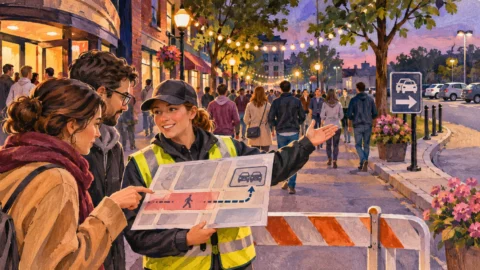
A street becomes pedestrian-only after the game. What changes?
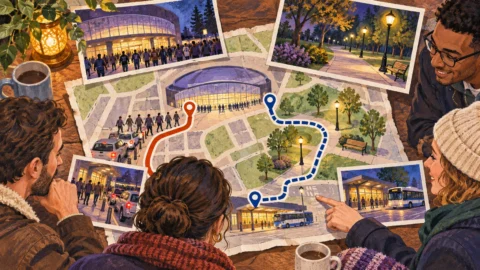
Check a practice notice for the restricted section, hours and permitted vehicle approach. Update the walk and pickup as two parts of the same trip.
Check a practice notice for the restricted section, hours and permitted vehicle approach. Update the walk and pickup as two parts of the same trip.
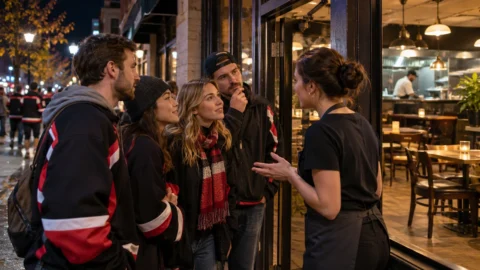
Confirm the service you want, its last order or entry time, and the walk from the arena. Use a fictional evening to see when a second stop fits.
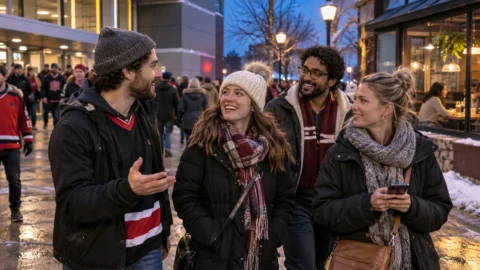
Plan one short walk after the game using a named exit, an open second stop and a time you can still make your ride home.
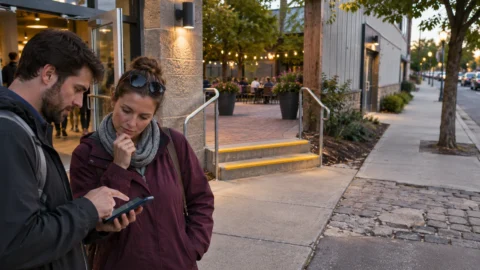
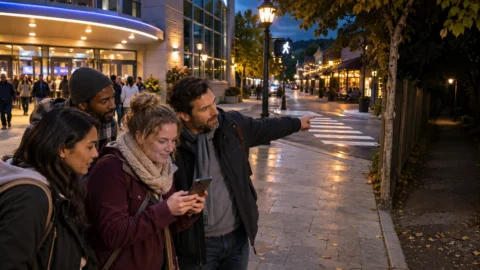
Write a useful walking note from the arena to a second stop. Cover the surfaces, steps and crossings that a distance alone cannot explain.
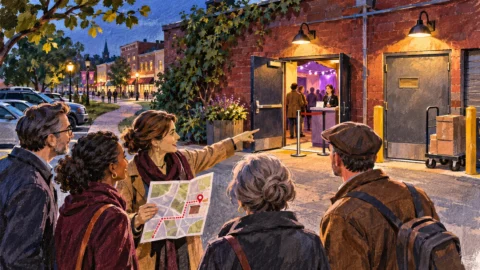
Check whether a rear entrance is intended for the public, and whether it changes the walk, signing-in point or distance to a second stop.
Compare two fictional return routes by lighting, crossing and travel. Choose a quieter approach that still works at your departure time.
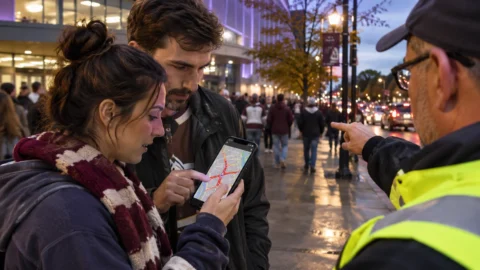
Use City of Brantford road notices and the venue’s current pickup directions to check the part of your route affected by post-game traffic.
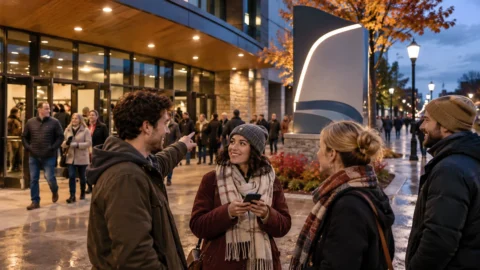
Choose a recognizable landmark, a waiting window, and a fallback. The sample works even when someone exits on the opposite side.
Downtown notices identify affected streets and qualified pedestrian access. They do not establish street lighting, a usable late-night doorway or an observed walking time.
Compare two invented walks of equal length by crossings, surfaces, turns and open doors. Work out which one fits the group and its schedule.